Global companies are reconsidering how they create technical teams. In order to obtain flexibility, technical depth, and cost effectiveness, founders and CTOs now hire software developers from abroad rather than restricting their hiring to expensive local markets. Software developers in Nepal are growing as one of the most attractive options for businesses seeking trusted and scalable remote teams without compromising quality.
The article takes you through the reasons why organizations are increasingly hiring software developers from Nepal, the growing trend of businesses hiring more of them, and how to create an organized remote work model. If you’re looking to hire software developers in Nepal to build a scalable remote team, be sure to read till the end!
Why Global Companies Hire Software Developers From Other Countries
The traditional internal model is slow and costly. As competition for great engineers heats up, salaries in Western Europe and North America are rising. Businesses that hire software developers around the world benefit from:
- Reduced expenses for operations
- Quicker cycles for hiring
- Having access to more diverse skill sets
- 24-hour cycles of development
- Increased scalability
Companies are doing more than just saving money when they purposefully hire software professionals from abroad. They are creating strong engineering environments that are strong. Nepal has become a serious participant in this discussion. The case for collaborating with software developers in Nepal has been supported by the rise in digital education, international outsourcing, and IT exports.
You May Also Be Interested In: Hire Remote Software Engineers in Nepal for Scalable Tech Growth
The Growth of Software Developers in Nepal
Nepal has quietly developed an established technology sector over the past ten years. Every year, thousands of IT graduates are produced by universities. Self-learning platforms and coding boot camps have sped up the acquisition of practical skills. Therefore, software developers in Nepal now operate across the development of websites, mobile applications, platforms for SaaS, fintech remedies, blockchain technology, and projects involving AI and machine learning.
Businesses that employ software developers in Nepal frequently comment on their strong technical backgrounds and flexibility. The growth in the number of software developers in Nepal has been helped by the growing internet connectivity and digital penetration, which also makes remote cooperation easier than before. The World Bank’s evaluation of Nepal’s economic and digital development shows that the country has made consistent gains in fields that rely heavily on technology.
Technical Proficiency and International Experience Among Software Developers in Nepal
One common misunderstanding regarding outsourcing markets is that there may be differences in technological standards. Still, Nepalese software engineers regularly work alongside global startups and businesses. Many engineers are skilled in TypeScript and JavaScript, Vue, Next.js, React, Django, Laravel, Node.js, React Native, Flutter, Google Cloud, AWS, Azure, and pipelines for CI/CD and DevOps.
Businesses frequently work with experts who understand agile approaches, Git workflows, Jira systems, and international communication standards when they hire software developers from Nepal. Furthermore, an environment that supports software developers grows stronger with institutional assistance in Nepal.
Why Hire Software Developers in Nepal: Strategic Advantage
The following are major strategic advantages of hiring software developers in Nepal:
Saving Money Without Neglecting Quality
Although cost is sometimes the primary factor in a company’s choices to hire software engineers overseas, Nepal provides much more than just price. Companies can save engineering costs by between 50 and 70% while still producing excellent technological results when compared to Western markets. Nepalese software engineers are very skilled in long-term maintenance projects, SaaS engineering, and developing products.
Software developers in Nepal are able to offer reasonable rates and establish stable careers due to lower living expenses. This establishes a lasting framework that allows businesses to hire software developers at optimal prices without negatively impacting long-term product performance, scalability, or code quality.
English Proficiency and Clear Communication
The foundation of distant collaboration is communication. Because English is frequently utilized in professional and higher education settings, international firms confidently hire software developers from Nepal. The majority of software developers in Nepal interact with foreign clients on a regular basis, guaranteeing transparent reporting, effective sprint planning, complete technical documentation, and smooth client meetings.
Lack of communication can cause delivery cycles to slow down when businesses engage software engineers. Language barriers are small when working with developers in Nepal, enabling distributed teams to function clearly and cooperatively.
Time Zone Advantage
Nepal’s time zone (GMT +5:45) offers an overlapping alignment with North America and an advantageous overlap with Europe and Asia. Extended development cycles and flexible scheduling are benefits for businesses that hire software developers in Nepal. Further, software developers in Nepal may continue working on projects for US-based businesses while internal teams are not online, which speeds up the time it takes to produce new products.
Businesses can hire software engineers who help cut down on turnaround time, increase iteration speed, and maintain a steady development pace due to this approach.
Cultural Compatibility and Strong Work Ethic
When businesses hire software professionals from abroad, cultural alignment is quite important. Nepalese professionals are widely recognized for strong work discipline, respect for deadlines, long-term commitment, and collaborative teamwork.
When hiring software developers from Nepal, many international managers highlight dependability and accountability as key competencies. Nepalese software developers easily adjust to global workflows, agile methodologies, and performance requirements because they frequently work with international clients early in their careers.
Pipeline for Education and Ongoing Skill Development
Every year, Nepal produces thousands of IT graduates, helped along by universities that adhere to global academic standards. Software developers in Nepal have a strong culture of self-learning outside of the classroom.
Employing software developers in Nepal guarantees that businesses have access to professionals who stay current with developing architectures, cloud technologies, DevOps methods, and modern frameworks. Long-term scalability is improved by ongoing upskilling, which makes it simpler for businesses to hire software engineers on a regular basis as their technical requirements change.
Also Read: Remote Talent in Nepal: Empowering Your Global Growth Strategy
Guide to Creating an Expandable Remote Workforce in Nepal
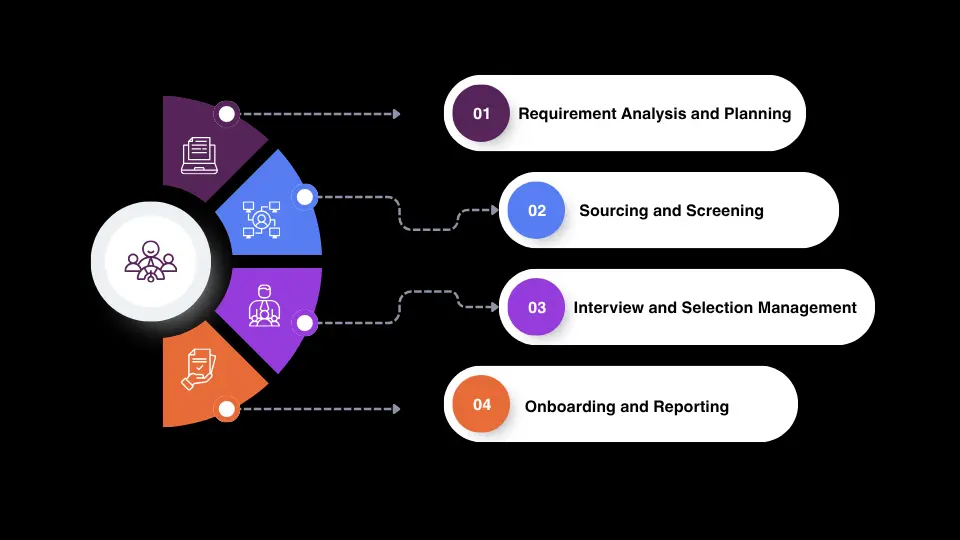
Companies must adhere to standardized procedures in order to hire software developers and create scalable operations. The following steps can be used as a guide:
Step 1: Establish the Technical Needs
Establish the tech stack, project scope, long-term scalability objectives, and necessary expertise level before you hire software developers. A well-defined scope guarantees that the best software developers in Nepal are chosen.
Step 2: Select an Appropriate Hiring Model
Software developers in Nepal can be hired by businesses directly, through staff augmentation partners, local outsourcing companies, or through specialized remote teams. Control, cost, and scalability are all affected by every model. Many firms start by employing two to three software developers in Nepal before progressively growing.
Step 3: Assess Technical Proficiency
Included in technical interviews should be live coding sessions, talks about architecture, and situations involving problem-solving. Long-term performance increases when businesses thoroughly assess software engineers before hiring them.
Step 4: Establish Remote Infrastructure
Make use of platforms GitHub/ GitLab, Jira/ Trello, Slack/ Microsoft Teams, and Notion/ Confluence. Infrastructure transparency lowers friction when hiring software developers.
How You Can Scale From 2 Developers to 20
Scalability is one of the reasons companies hire software developers in Nepal. Companies may hire a small team of front-end, back-end, and DevOps software developers in Nepal rather than hiring a single, costly programmer locally.
Businesses keep hiring software developers one at a time as product traction increases. The growing Nepalese IT sector allows businesses to hire software developers on a regular basis without diminishing the skill pool.
Retention and Long-Term Collaboration With Software Developers in Nepal
Low retention is one of the main hazards that businesses face when they hire software developers from afar. Regular turnover raises onboarding expenses, delays releases, and conflicts with development cycles. Yet, Nepalese developers are widely known for valuing consistency, planned development, and enduring business partnerships. Retention becomes a significant strength rather than a concern when properly managed.
This benefit usually shows up as follows in an organized remote setup:
- Strong Preference for Longer Engagement: A lot of software developers in Nepal look for steady positions with room to expand. When compared to short-term contract models, companies that hire software developers for long-term collaboration frequently have lower turnover rates.
- Lower Attrition Compared to Saturated Tech Markets: Software developers in Nepal are less likely to switch positions than those in oversaturated international tech marketplaces. Companies that employ software developers in Nepal frequently experience stable teams and longer average tenure.
- Transparency in Career Paths Increases Retention: Retention is greatly increased when companies that hire software engineers offer skill development, performance-based growth, and structured promotions. Transparent career advancement is well-received by Nepalese software professionals.
- Retention of Knowledge: The necessity to hire software developers over and over again raises the cost of hiring and training new employees. Retaining skilled software engineers in Nepal lowers operational friction and maintains productivity.
- Trust and Ownership Increase Over Time: Retained engineers ultimately go above and beyond their duties. Software engineers in Nepal frequently assume ownership of modules, optimize systems, and suggest enhancements when companies regularly hire them and make growth investments.
- Create a Long-Term Remote Engineering Core: Businesses that regularly hire software developers without considering retention are always rebuilding. On the other hand, reliable engineering cores that foster long-term scalability and innovation are produced by Nepali software development teams.
You May Also Be Interested In: How to Hire and Manage Remote Employees in Nepal
Conclusion
Saving money is not the only requirement for creating a scalable remote team. Talent, flexibility, communication, and consistency over time are all necessary. Businesses gain flexibility and resilience by selectively hiring software developers from developing tech markets. Organizations that hire software developers in Nepal find that Nepalese software developers stand out among these markets due to their affordability, cultural flexibility, technical competency, and English language ability.
It might not be the answer if your business wishes to increase engineering capacity without raising operating costs. It might be worldwide. Remote teams become innovation engines when software developers are carefully hired, and efficient systems are built around them. Additionally, Nepali software developers are prepared to create the next generation of scalable digital products as demand from around the world increases.